samedi 16 août 2014

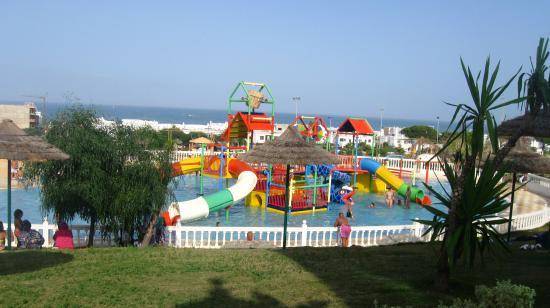
Smir Park beach is located halfway between M'diq-Fnideq and 5 minutes from the motorway exit, spreads over an area of ​​14 hectares. It consists of three parts: one dedicated to the animation part (and that includes a water park and an amusement park in operation since 2007), the second part of the project is a resort, the third party is a resident of residential apartments consisting of F3 and F4, which also includes tennis courts, sports fields, swimming pool and playgrounds. This project also offers services within the apartment. It is a modern apartment that offers quality services, air-conditioned apartments, luxury finishes, kitchen (cooker hood, hob, oven and fridge), and sun terrace with or without pool and a large bay window .


This is one of the largest in Morocco. It is amazing to walk aimlessly around its narrow streets and you need a detailed map for them so you don´t get lost. Inside you can experience all of its historical culture. You need at least four days to visit the many attractions it has. Too bad the "infidels" do not let us enter the mosques and enjoy it. They didn´t let us in the Mausoleum of Moulay Idriss, either. The Palace is also inaccessible because Mokry has acquired a French firm and does not let people visit. The constant wandering of people in the main area is impressive. Its aromas and colorful surroundings are a real challenge to a person´s senses.

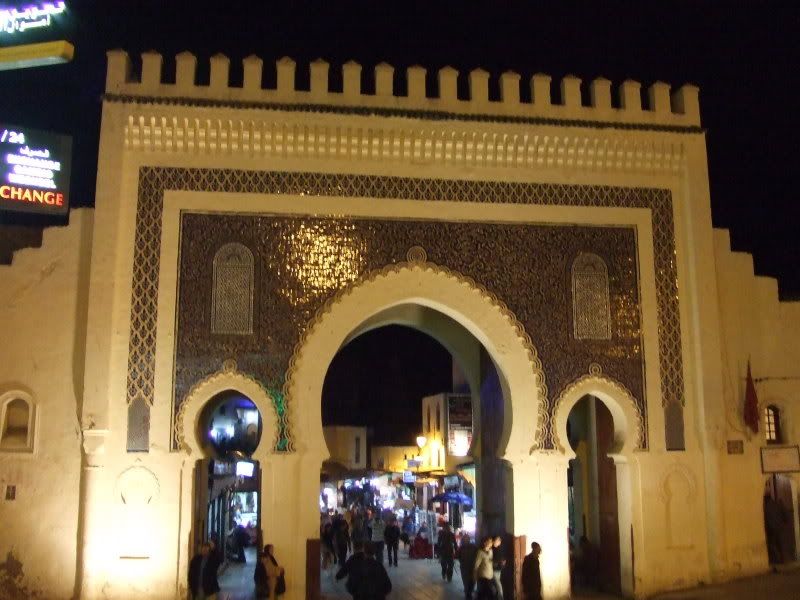
Bab bou Jeloud is one of the gates to the Fez Medina in the old city. When you go through it, stay a while to admire the blue mosaics, the fine designs and the patterns that decorate its imposing size, and the activity that surrounds it. Bab Bou Jeloud is always lively, whatever the time. If you can, go to a cafe balcony to see the gate from above. There are a multitude of small hotels, restaurants and shops around. It looks like a sea of ants. The men carry bundles to bring the heart of the Medina, like vegetables, leather, oats for horses and donkeys, women chatting, strolling and shopping, everyone was screaming, flailing. It's a show full of colours. The hotels are the cheapest here. They cost about 10 euros/night for a clean double room with breakfast. For the cheapest hotel, the shower won't be included, but you can go to the public toilet! Unlike Marrakesh, the prices for accommodation aren't negotiable. There's relatively little supply for lower budgets, and they know it.

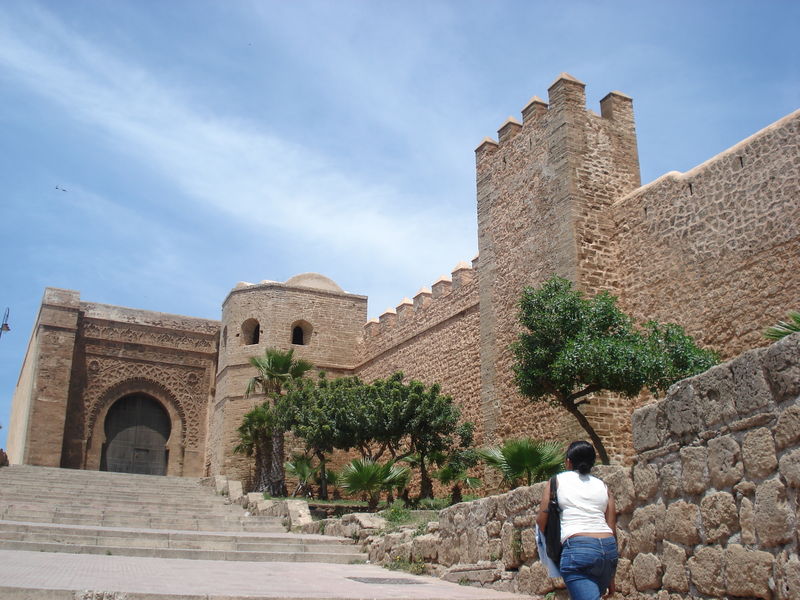
It is an enclosure built in ocher-red carved stone, constructed in the 12 century by the Almohads. Formerly it was called "Mehdiya" and it was a sort of fortified convent, where religious soldiers departed to fight in the Holy War against the Christians of Spain. Later with the arrival of the Andalusians in the 17th century it was named "Kasbah Andaluse" until 1883 when the Arabs named it "Kasbah des Oudayas", the name by which he is known today. It is situated north of Rabat on the shores of the Atlantic Ocean and the mouth of the river Bou Regreg. It's like another city in Rabat, with narrow cobbled streets, the houses have few windows and walls are very wide. This is because they needed to be strong and resistant. The most characteristic are its blue and white walls.

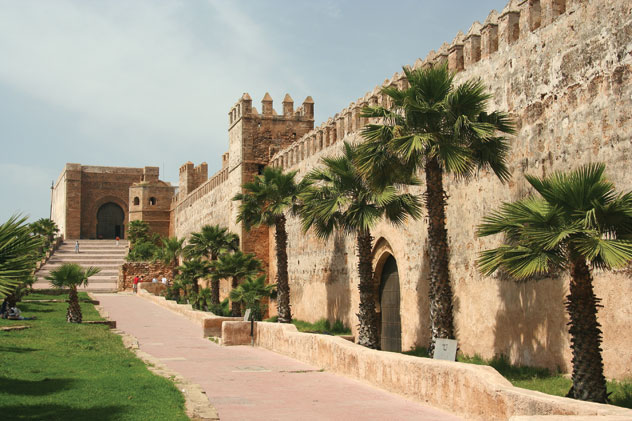
The Walls of Rabat encircle and protect the Medina, the historic center of the city. If you decide to take a train there, go down Mohamed V Avenue, past the central post office, and you'll be at the walls in no time. You can see that they're building the first metro line in Morocco, which is a huge project that will connect Rabat Salé Bou Regreg across the river. The doors each have a different name, and were excavated gradually with the increase in traffic and the population. The first wall dates back to the Almohad dynasty in the late 12th century. It measures more than eight feet high and two feet deep. It's well preserved, before there was a single door, Bab Zaer, now it's Bab el Alou, Er Rouah Bab, Bab el Had.

Chellah ou Chella is a site of great historical importance, now recognized and protected, attracts many tourists. Far from invasive urbanization of the city of Rabat are the remains of the necropolis Merinide of the thirteenth century, Chella, built on the ruins of the ancient Roman city of Sala Colonia. The site test the presence of the Carthaginians and Phoenicians on the shore of Bou Regreg. The excavations testify to the life of a Roman town, a hole with traces of the Curia, a triumphal arch and a monumental fountain. A place left in abandoned several centuries and then the earthquake of 1755 destroyed a large part of the site remain to see the ruins and imagine the past life. Today, this site is considered the most romantic of Morocco. Surrounded by a fortified town walls, is accessed through a monumental gateway lavishly decorated the sides of which are two semi-octagonal towers. On the inside there are some tombs, a fountain for ablutions, the mosque of Abu Yussef Yacum with a minaret decorated with polychrome majolica, now in ruins. In spring the site in full bloom and more beautiful, a place that creates mystery and legends. Is organized every year here "Chellah Jazz Festival" thanks to a collaboration with the European Union. We love history, this site will be the starting point to study the period of Marinids, a Berber dynasty who ruled for two centuries in Morocco.

The Hassan Tower is a famous landmark of Rabat. Sultan Yacoub El Mansour (twelfth century) plans to build the largest mosque in the Muslim world after the Samarra in Iraq. The work was abandoned after his death in 1199. The tower was peaking at over 60 m, but only reached 44 m. This site was chosen to build the Mausoleum of Mohammed V, where King Hassan II and his father are buried. His style is a masterpiece of traditional Moroccan art.

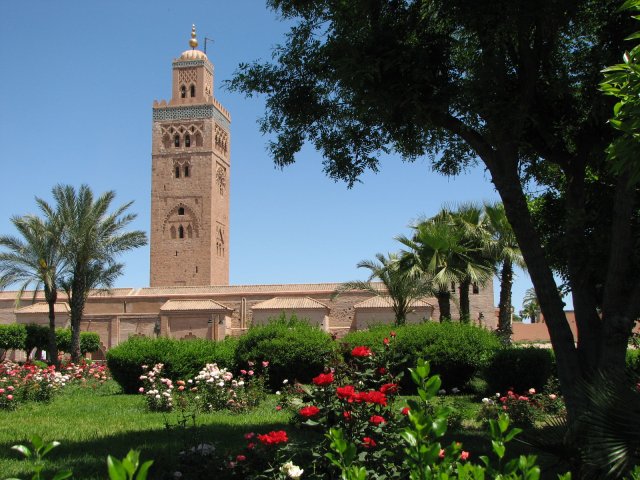
The Koutoubia minbar is a pulpit commissioned by Sultan Ali Ben Youssef. It was started in Cordoba in 1137 and completed eight years later. First installed in the Ali mosque, it was later moved to the Koutoubia Mosque, also known mosque booksellers. This minbar carved and decorated with marquetry is an invaluable piece jewel of Moorish art of the twelfth century. It moves by a clever system of ropes that has long been the faithful believe it was miraculous. Today, it is visible to the El Badi Palace.


The city ramparts were built in the twelfth century under the Almoravid dynasty on the orders of Ali Ben Youssef to protect themselves from attacks by tribes of the High Atlas, initiated by the Almohads. Made of a mixture of stones, lime and earth, these walls extend over 19 km with a maximum height of 8 meters. They are punctuated by towers every 35 meters and drilled 22 gates, the oldest of which are Bab er Robb and Bad Agnaou. These are also the best decorated.


True heart of Marrakech, the most famous square in the Maghreb is the social center of the medina. Place the liveliest in the city is a place of encounter and exchange for centuries. The whole city seems to move at one time or another during the day.
Located at the entrance of the souk, "the place of the dead," a literal translation of Jemma el Fna, was once a public performance space. Times have changed since the place is now a place of joy where you can see fire-eaters, monkey tamers and snake charmers. Public place or open air theater?
In summer, the place is swarming with people late into the night. The show is fascinating. The squeezed orange juice will be appreciated, the best in the world, to refresh during the day. Only 3 dirhams (0.30 ??), it would be a shame not to!
At night, the square is followed by dozens of restaurateurs street. Hardier dare dive into the fray and sit at the tables to sample new flavors. On the menu: veal feet, liver camel, sheep head ?? Instead, it recommends the delicious kofta kebabs.

Finally, the Jemaa el Fna is a strategic place to begin a tour of Marrakech. You are near the souks and the medina and the Koutoubia Mosque is not far away.
If Morocco is conspicuous by its amazing geography, it is not left on the cultural and architectural plans. A long history as incredible has left its mark through the many monuments of the country. Berber influences, Arab and Andalusian blend in perfectly with the entire Moroccan heritage.

Since the construction of the city of Volubilis by the Romans in the 1st century until the construction of the mosque Hassan II in 1992, the Moroccan heritage has been enriched. Many dynasties has known all over the country made ​​their building block.

Many rulers were great builders, like Moulay Ismail, who made Meknes a "Moroccan Versailles".
Today, 8 Moroccan sites are listed as World Heritage by UNESCO. We note the cities of Fez and Marrakech, archrivals who have played instead of capital for nearly 900 years. These are, with Meknes, the most interesting historic cities in the country in terms of architecture and cultural significance of the monuments.
No one would like to miss out on such a culturally rich and environmentally friendly country. Morocco is a hot tourist destination for many people from every corner of the globe. The government has made a conscious effort to make tourism the number one industry in the country.
The Moroccan economy has been growing steadily for the last few years. It has been one of the most politically stable countries and has been working hard to boost the tourism industry, which has a high potential for growth. Morocco is called the land of mystery and a place worth a visit. The sun shines bright nearly 300 days of the years and makes for a good setting for some great vacations visiting deserts, beaches and snow capped mountains. There is such diversity you can hardly want to miss anything. The strong culture lures one and all to explore the colorful lives of the Moroccans.
Under the guidance of King Mohammed VI and his plan of Vision 2010, the Moroccan government is taking great efforts to improve infrastructure that is needed to support about 10 million visitors by 2010. Efforts are being taken to market Morocco as a cheap and exotic location yet safer for all tourists. Domestic tourism is also being popularized. The government is planning and executing good projects that are aimed at improving the rail and road links. The open skies policy has also allowed more airlines to come in into the country. The airports are being upgraded or new ones build to match the international standard and support larger number of air traffic. With improved relations with Algeria, the borders have been opened and air services between the two countries have resumed. The Algerian tourists are growing in numbers with tourists coming in to even visit family and friends in Morocco. There are popular ports like Casablanca and Tangier that often have cruise ships visiting. The road link as well as the rail link is also good between the major cities and tourist destinations making it the most popular mode of transport.
Morocco is popular for its pristine beaches rich in natural beauty. You can visit them the whole year round with little to worry, as the climate is fresh and pleasant. Tourists from France, Spain, Britain, Germany, Netherlands, etc love the large beaches resort on the long Atlantic coast. Agadir is one such town that is the favorite of many tourists. Moroccans living abroad form a large chunk of the tourists who visit Morocco every year. With its nearness to Spain and popularity with the French people, these tourists make for about 20% of its visitors. Though earlier beaches were the major tourist attractions, the modern tourist industry has also been capitalizing on ancient Roman and Islamic history. Most of the tourists visiting Morocco visit it to glimpse the cultural heritage of the country. The popular regions are Tangier, Agadir, Marrakech, Casablanca, Imperial cities, Quarzazate and Tarfaya.
The Atlas mountains pull the adventure lovers to it. They have such beauty hidden in its fold that you cannot leave Morocco without visiting it. The tow of Agadir is known for its coastal resorts and the beautiful beaches but it also forms the base for tours to the Atlas Mountains. Growth in adventure tourism in the Atlas and Rif Mountains has been stupendous. These mountains provide exciting trekking as well as mountain biking opportunities. There are great trails for hiking and you can go hours on end simply taking in the beautiful flora and fauna in the valleys. The diversity and the existence of the exotic variety of flora and fauna make it a nature lover’s paradise.
The opportunities to explore are many. A visit to Morocco cannot be complete without a camel ride to the deserts. Desert tourism is also being developed. You can have great memories of the deserts as you lie on the sands watching the twinkling stars above. It is simply a great experience. As you visit the cities and towns of Morocco you will be amazed at the culture and beauty of the Kasba and the Medina. The castles, gardens and the local markets are a must visit during your stay in Morocco. There is so much to see; nature reserves, sparkling rivers, ancient buildings, handicrafts, colored carpets to name a few. There are several museums that can give a glimpse to the country past glory.
You have to visit Morocco to believe and live the beauty of the country’s cultural heritage. There is so much to explore that one trip can hardly be enough to catch up with everything.

Unordered List

Fourni par Blogger.

Popular Posts

Recent Posts

Text Widget